Table of Contents
- Key Takeaways
- Supportive Therapies That Complement Regenerative Treatments
- What Are Supportive Therapies?
- What Types of Supportive Therapies Are Commonly Used?
- How Can Rehabilitation and Physical Therapy Support Patient Care?
- What Role Do Nutrition and Exercise Play?
- What Does Current Research Suggest?
- What Challenges Should Be Considered?
- Why Are Supportive Therapies Often Considered Alongside Regenerative Treatments?
- Choosing the Right Supportive Therapy for You
- Looking Ahead
- Frequently Asked Questions
- Reference Links
Supportive therapies are techniques that can also be used in addition to regenerative medicine in terms of treatment options for patients. Scientists are investigating different forms of supportive therapy, including rehabilitation, physiotherapy, nutrition, exercise, and even lifestyle changes, in order to find out how they affect a person’s general condition. The study of regenerative techniques is still continuing, but the investigation of supportive therapy is also crucial for healthcare.
Key Takeaways
- Supportive treatment is usually investigated along with regenerative medicine techniques.
- The use of rehabilitation and physical therapy is frequent within patients’ recovery programs.
- Nutritional habits, physical activity, and lifestyle may have some impact on overall health.
- Scientists are still researching the importance of supportive treatment in medical practice.
- Clinical studies help to assess the importance of supportive treatment in various healthcare facilities.
Medically Reviewed By
Written By – Nishat Arfin
Scientific Review By – Tabish Iqbal
Medically Approved By – Global Stem Cell Care Medical Team
Last Reviewed: June 2026
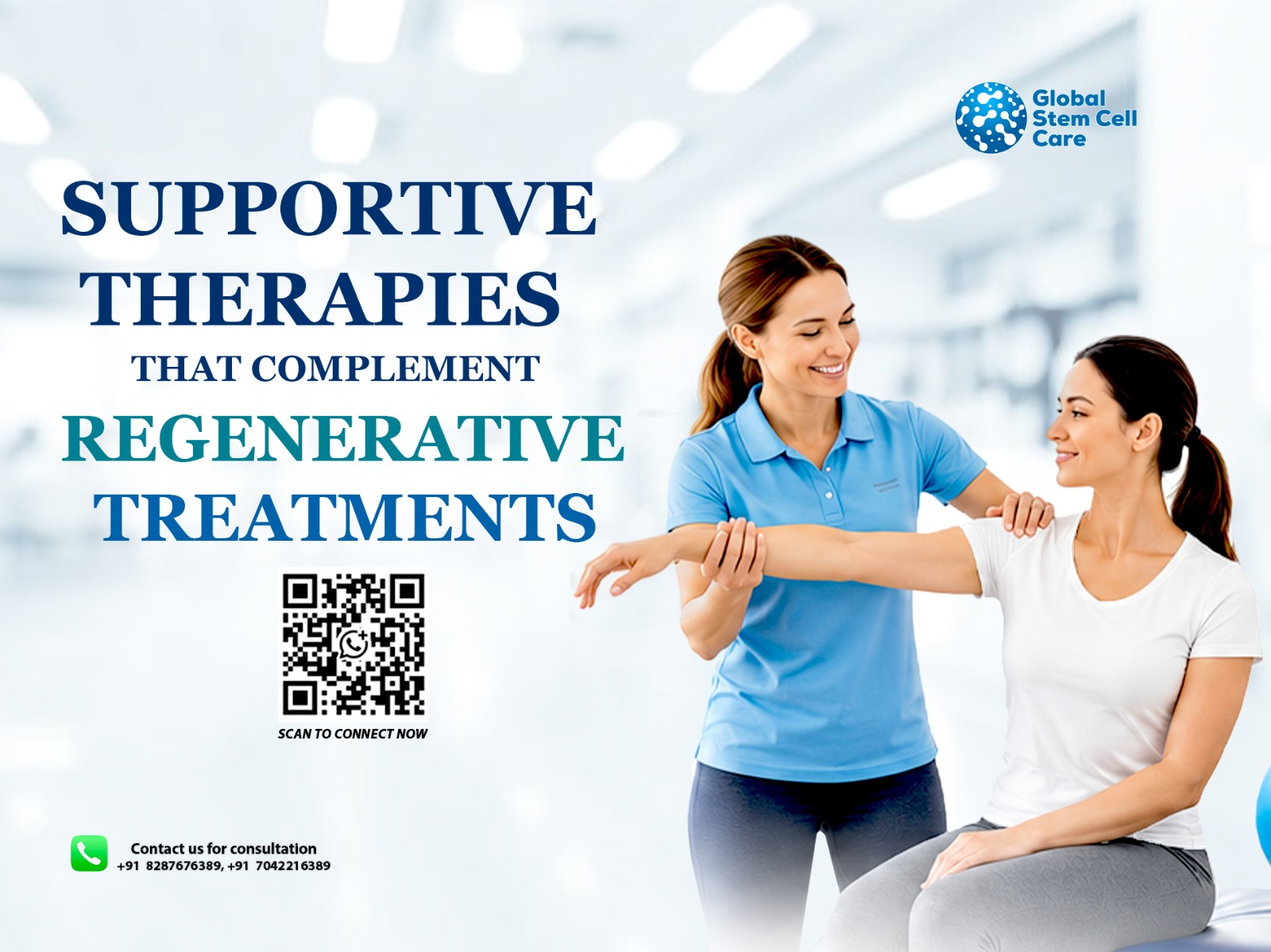
Supportive Therapies That Complement Regenerative Treatments
For years, regenerative medicine has been studied in relation to stem cells, tissue engineering, and other emerging fields in healthcare research. Although patient care and recovery may require more than a single treatment approach. Researchers are currently focusing on how supportive therapies fit within broader care strategies and how they may support the overall health, function, and quality of life.
Supportive treatments can range from rehabilitation, physiotherapy, nutrition, exercises, and more – all designed to help patients move around and feel good. With more research being done, scientists are trying to learn how these types of treatment might fit into an overall care plan for patients.
In this blog, we will look at supportive treatments that are researched in connection with regenerative treatments.
What Are Supportive Therapies?
Supportive therapies are commonly referred to as approaches that may be used alongside medical treatments to support patient care strategies. These therapies typically focus on helping individuals maintain physical function, mobility, comfort, and overall well-being throughout their recovery journey.
Instead of focusing on a single aspect of health, supportive therapies address various factors that may influence daily activities, physical performance, and quality of life. Depending on the patient’s needs, all these approaches may include rehabilitation programs, physical therapy, nutritional support, and other supportive care.
With the development of research on healthcare, supportive therapy is becoming a crucial subject for investigation as it is viewed as a component of holistic care and rehabilitation plans.
What Types of Supportive Therapies Are Commonly Used?
Several supportive therapies may take many forms depending on an individual’s health needs, treatment goals, and recovery plan. Scientists often explore these approaches combined with regenerative medicine—as they address different needs of patient care and day-to-day functioning.
Some commonly discussed supportive therapies include:
- Rehabilitation Programmes: Planned programmes for helping patients to gain mobility, functioning, and independence.
- Physical Therapy: Treatment techniques that emphasize mobility, strength, flexibility, and physical performance.
- Nutrition: Methods used for maintaining the overall health and nutritional condition of an individual.
- Exercise Programmes: Physical exercises undertaken to achieve general physical fitness.
- Psychological Support: Techniques used to help patients cope with emotions and thoughts throughout the process of treatment.
Since patient requirements vary, the above forms of therapy are often considered as part of comprehensive healthcare and rehabilitation approaches.
How Can Rehabilitation and Physical Therapy Support Patient Care?
Both rehabilitation and physical therapy are among the most commonly discussed supportive approaches in healthcare research. These therapies are often combined into patient care plans while focusing on movement, physical function, and everyday activities.
Several considerations motivate researchers to conduct studies regarding rehabilitation and physical therapy in connection with patient care:
Mobility Support: The process of rehabilitation can assist people in reaching their goal of mobility or enhancement of mobility and physical ability.
Physical Fitness: Physical therapy often involves exercises that contribute to physical fitness through increasing the physical abilities of the body.
Functional Movements: A lot of rehabilitation processes involve assistance in performing activities and movements of everyday life.
Individualized Treatment Plans: Rehabilitation programs can be customized according to the particular needs and aims of each individual.
As further research is conducted in the field of health care science, there are still many topics for investigation, including rehabilitation and physical therapy.
What Role Do Nutrition and Exercise Play?
Also adding nutrition and exercise plan as a part of a broader healthcare and wellness approach. Scientists continue to study these approaches to support overall health status, physical conditioning, and lifestyle habits that may influence an individual’s health experience.
Some areas commonly explored include:
Nutritional Support: Eating a nutritious diet supplies nutrients that help maintain body functioning.
Exercise: Physical exercise is another field of study that is related to mobility and conditioning of the body.
Health Maintenance: Scientists examine what lifestyle factors may influence health and body functionality.
Quality-of-Life Factors: Nutrition and exercise are taken into account while examining more general health and wellness factors.
As science progresses, nutrition and physical activity continue to be relevant fields for investigation within the scope of supportive care and patient-oriented research.
What Does Current Research Suggest?
Studies that involve support therapies keep growing in different fields of medicine. Instead of looking at a certain effect, many researchers try to study the role of supportive methods in the overall strategy.
Focus on Functional Outcomes
Researchers evaluate different approaches related to mobility, physical function, and daily activities to better understand patients’ overall experiences.
Growing Interest in Patient-Reported Outcomes
Several studies now include quality of life tests and patient feedback alongside clinical observations, supporting a wide range of healthcare outcomes.
Emphasis on Individualized Care
Current research understands that healthcare experiences vary from patient to patient. As a result, scientists continue to explore approaches that can support different needs and circumstances.
Need for Long-Term Research
Researchers continue to conduct long-term studies to better understand how supportive therapies fit within broader healthcare and rehabilitation strategies.
These areas of investigation continue to shape how supportive therapies are studied within modern healthcare research.
What Challenges Should Be Considered?
As supportive therapies have become a widely discussed area in healthcare research, researchers studying their impact can face challenges. Researchers often evaluate multiple factors that may influence patient experience and research outcomes.
Individual Differences
Different people may respond to supportive care approaches based on their health status, age, lifestyle, and healthcare needs. Observing these differences can make research findings more challenging to compare across studies.
Multiple Contributing Factors
Rehabilitation and care processes can be characterized by the presence of various elements at once. Researchers should take into account these elements when assessing the supportive treatments and more general care procedures.
Differences in Care Programs
The supportive treatment can vary in its duration, strength, and nature. Therefore, the studies can apply various approaches to the assessment of the outcome and experience of patients.
Necessity of Further Investigation
Research scientists keep studying supportive therapies within various healthcare settings to see how these techniques are integrated into the comprehensive treatment plan.
Why Are Supportive Therapies Often Considered Alongside Regenerative Treatments?
In many cases, scientists tend to consider supportive therapies in relation to regenerative medicine due to the multidimensional nature of health care provision. In other words, while the research of regenerative medicine will be based on biological mechanisms, the research of supportive therapies is related to mobility, physical performance, nutrition, and well-being.
As a result of a comprehensive approach, researchers can obtain a more profound vision of patients’ conditions, their rehabilitation, and health care in general.
Choosing the Right Supportive Therapy for You
The choice of a supportive therapy can vary depending on an individual’s health needs, treatment goals, and overall circumstances. Since no single approach is suitable for everyone, healthcare professionals often consider multiple factors when discussing supportive care strategies.
Some factors that may influence the selection of a supportive therapy include:
Health Condition: Different conditions may require different supportive approaches based on individual needs and circumstances.
Physical Function: Mobility, strength, and day-to-day activities may help determine which supportive strategies are most appropriate.
Personal Goals: Some individuals may prioritize maintaining independence, physical activity, or participation in rehabilitation programmes.
Professional Guidance: Healthcare professionals can help evaluate available options and discuss supportive approaches that align with a person’s overall care plan.
As supportive therapies continue to be studied, understanding individual needs remains an important part of selecting appropriate supportive care strategies.
Looking Ahead
Supportive therapies remain one of the crucial directions in medical science research and are often researched together with the approaches of regenerative medicine. Such things as rehabilitation, physical therapy, nutrition, exercises, and other supportive interventions still remain subjects of study to enhance the understanding of their application in patient treatment.
With the development of science, additional research in the field may help in developing a better understanding of the application of supportive therapies within a larger scheme of things in healthcare and rehabilitation.
Frequently Asked Questions
Q1. Can supportive therapies be tailored to individual patient needs?
Yes. Supportive care approaches are chosen based on factors like health condition, physical function, treatment goals, and overall well-being.
Q2. Why is nutrition often discussed as part of supportive care?
Scientists continue to study nutrition, as dietary habits may influence overall health, physical function, and wellness outcomes for patients.
Q3. Is psychological support considered a supportive therapy?
Yes. Psychological support can be included within broader supportive care strategies and may help individuals manage their emotional and mental well-being during the treatment journey.
Q4. Do supportive therapies only focus on physical recovery?
No. The supportive therapy may deal with many areas of human health, such as physical ability, movement, psychological health, functioning, etc.
Q5. Why do researchers study supportive therapies alongside other healthcare approaches?
Researchers often investigate multiple aspects of patient care together to better understand overall healthcare experiences and rehabilitation strategies.
Reference Links
National Institutes of Health (NIH). Introduction to Stem Cells. Available at:
https://stemcells.nih.gov/info/basics
National Institutes of Health (NIH). Stem Cell Basics. Available at:
https://stemcells.nih.gov/info/basics/stc-basics
International Society for Stem Cell Research (ISSCR). Stem Cell Resources for Patients. Available at:
https://www.isscr.org/patients
International Society for Stem Cell Research (ISSCR). The ISSCR Guide to Stem Cell Treatments. Available at:
https://www.isscr.org/treatment-guide
Lovell-Badge R, Anthony E, Barker RA, et al. ISSCR Guidelines for Stem Cell Research and Clinical Translation. Stem Cell Reports. 2021. Available at:
https://pubmed.ncbi.nlm.nih.gov/34048692/
Turner L. ISSCR’s Guidelines for Stem Cell Research and Clinical Translation. Stem Cell Reports. 2021. Available at:
https://pmc.ncbi.nlm.nih.gov/articles/PMC8190662/
Mao AS, Mooney DJ. Regenerative Medicine: Current Therapies and Future Directions. Proceedings of the National Academy of Sciences (PNAS). 2015. Available at:
https://pmc.ncbi.nlm.nih.gov/articles/PMC4391550/
Poliwoda S, Noor N, Downs E, et al. Stem Cells: A Comprehensive Review of Origins and Emerging Services for Medical and Regenerative Therapy. Cells. 2022. Available at:
https://pmc.ncbi.nlm.nih.gov/articles/PMC9404248/
Important Regulatory Note
Stem cell-based approaches discussed in this blog remain the subject of ongoing scientific and clinical research. Their use should be considered in accordance with applicable medical guidelines, regulatory recommendations, and the advice of qualified healthcare professionals.