
📅 Published on: February 1, 2021 | 🔄 Updated on: March 28, 2026 | By: Global Stem Cell Care India
Key Takeaways
- 01:Understanding Down Syndrome and Its Daily Challenges : Down syndrome is a genetically based condition because it involves an extra chromosome 21. It leads to intellectual delays and physical development challenges. Children may face learning, speech, and motor skill delays. It may also affect cardiovascular and immune system function. Individuals with Down Syndrome grow at various stages. Stimulus at an early age enhances adaptive and social behaviour. Conventional therapies include speech, physical, and occupational therapies. These work, but do not address the genetic condition. Caregivers look for more beneficial ways to improve the quality of life.
- 02:How Stem Cell Therapy Supports Developmental Improvement :Stem cell therapy presents an opportunity for regeneration for people living with Down Syndrome. The method relies on the use of stem cells to facilitate the repair of nerves and the brain. Cells may help improve cognitive ability over time. Patients sometimes show better motor skills and muscle control. Therapy may enhance communication and reaction speed in young children. Immune system support is another reported benefit. Lessening inflammation and optimizing neural connections is conducive to optimal functioning. Therapies coupled with supportive care in clinics in India provide the optimal outcome.
- 03:Why India Is Preferred for Stem Cell Treatment : India provides advanced stem cell treatment options at accessible costs. Modern protocols are used in these centres. Family-based support is provided. It assists parents during the course of treatment. Individual treatment plans are devised according to age factors and intensity levels. These days, several people visit India in pursuit of proper regenerative treatments. Short hospital stays and follow-ups optimize progress tracking for each child. Local expertise in stem cell medicine continues to grow rapidly. Affordability makes it an option for many families worldwide.
- 04:Realistic Expectations and Long-Term Support Benefits : The goal of stem cell therapy for improvement is not the repair of genetics. It’s working on the improvement of functioning over time. Changes can be observed by parents over time rather than seeing the transformation take place right before their eyes. Therapy complements speech and physical therapies at home or school. Early intervention tends to yield better developmental progress. Further studies and research are being done to strengthen and secure the treatment outcomes. Stem cell therapy is a novel and emerging form of treatment. Families need to consult with doctors before starting a treatment program.

Get Stem Cell Therapy for Down Syndrome in Delhi, India
Down syndrome is a genetic disease that is caused by an extra full or a partial copy of chromosome 21, which results in irregular cell division. The behavioral variations and facial characteristics of the Down syndrome is caused by the additional genetic material. Down syndrome differs among people in the level of severity, causing some form of either permanent intellectual impairment or some form of delay in growth. This is the most predominant hereditary chromosomal defect in children and the cause of learning disorders. Some physiological anomalies, including cardiac and gastrointestinal conditions, are also commonly induced. Better knowledge of Down syndrome and early interventions will dramatically enhance the quality of life of children and adults with this disease and help them live meaningful lives.
Stem Cell Therapy For Down Syndrome in India
Taking stem cell therapy for down syndrome in India can be affordable and effective at the same time. Down syndrome is genetic syndrome which can cause permanent cerebral disabilities and delay in growth of an individual or in some cases it can affect physical fitness. To treat this condition from the root, Global Stem Cell Care provides this innovative medical treatment for those who are suffering from this condition. Our doctors harness the regenerative ability of stem cells to restore damaged cells.
DO YOU KNOW ABOUT INTELLECTUAL DISABILITY?
Often known as trisomy 21, Down syndrome or Down’s syndrome is a developmental condition caused by the involvement of all or half of a third copy of chromosome 21. It is typically associated with physical development defects, slight to moderate learning disability, and distinctive facial features. A young adult with Down syndrome has an average IQ of 50, similar to the emotional potential of an 8- or 9-year syndrome.
In addition, the parents of the affected child are genetically normal. In 20-year-old women, the risk rises from fewer than 0.1 percent to 3 percent in those aged 45.
The extra chromosome is believed to arise through chance, with no known behavioral interaction or environmental cause that affects the probability. Down syndrome may be detected by prenatal tests throughout infancy.
Global Stem Cell Care has been providing the best of treatment to the patients who are suffering from this condition, and through the stem cell treatment, their symptoms have also improved.
Stem cell treatment is a cure for this condition that helps replace the damaged cells. Global Stem Cell Care has the best team that works for the effective treatment of this medical condition.
SYMPTOMS OF DOWN SYNDROME
A person with Down syndrome is an individual and there can be minor, moderate or serious intellectual and developmental disorders. Some individuals are well, and others have significant health issues, such as extreme heart defects.
Down syndrome infants and adults have distinct facial characteristics. While not all persons with Down syndrome have the same characteristics, some of the most common characteristics include:
- Flattened Face
- Small-sized head
- Short-cut collar
- Tongue Protruding
- Upward lids with slanting eyes (palpebral fissures)
- Unusually rounded ears or smaller ones
- Weak sound in the muscles
- Broad, short hands with a single palm crease
- Relatively small digits and little feet and hands
- Excessive mobility
- Small white spots called Brushfield spots on the colored portion (iris) of the eye
- Short height: short height
- Infants with Down syndrome can have an average height, but they usually develop slower and stay shorter at the same age as most infants.

DIAGNOSIS
The risk or chances of a woman having a baby with Down syndrome may be demonstrated by screening tests. But these tests can’t say or diagnosis whether the infant has Down syndrome for sure.
If the child has Down syndrome may be identified or diagnosed by screening testing.
The types of procedures, benefits and drawbacks, advantages and risks, and the meaning of the findings will be addressed with your health care provider. Your physician can suggest that you meet with a genetic counselor, if necessary.
During breastfeeding, screening tests
Down syndrome screening is provided as a standard part of prenatal treatment. While screening tests can only assess the risk of carrying a baby with Down syndrome, they can help you make more precise medical testing choices.
The first trimester combination test and the integrated screening test involve screening tests.
Combined test for the first trimester
The combined examination for the first trimester, which is completed in two steps, includes:
Blood Test. This blood test tests the plasma protein-A (PAPP-A) levels associated with pregnancy and the pregnancy hormone known as human chorionic gonadotropin (HCG). Abnormal PAPP-A and HCG levels may suggest an issue with the infant.
Nuchal Translucency Test. An ultrasound is used to measure a small region on the back of your baby’s neck during this procedure. This is known as the nuchal screening test for translucency. In this neck tissue, more fluid than average appears to accumulate when anomalies are present.
A doctor or genetic counselor will predict the risk of raising a baby with Down syndrome by using your age and the findings of a blood test and ultrasound.
Types
Trisomy 21
- Distinctive facial features
- Mild to moderate intellectual disabilities
- Heart, kidney and thyroid issues
- Less responsive to stimuli
- Vision and hearing impairment
- An inwardly curved little finger
- Wide space between the great and second toe
Mosaicism
- Lower IQ
- Slower Speech
- Small ears
- Eyes that tend to slant up
- A flattened face
- White spots on the iris of the eye
- Shorter height
Translocation Down Syndrome
- Flattened nose and face
- Upward slanting eyes
- Wide shorts hands with short fingers
- Excess skin at the nape of the neck
- The decreased muscle tone at birth
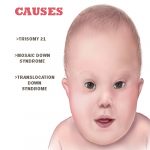
Down syndrome is a chromosomal condition that is associated with intellectual disability, a characteristic facial appearance, and weak muscle tone in infancy. All affected individuals experience cognitive delays, but the intellectual disability is usually mild to moderate.
Down syndrome results when abnormal cell division involving chromosome 21 occurs.
Down syndrome is caused by an abnormality in cell division which results in an extra partial or complete chromosome 21. This extra genetic material is what leads to the characteristic features and developmental problems associated with the syndrome.
- Trisomy 21: About 95 per cent of the time, Down syndrome is caused by trisomy 21 — the person has three copies of chromosome 21, instead of the usual two copies, in all cells. This is caused by abnormal cell division during the development of the sperm cell or the egg cell.
- Mosaic Down syndrome: In this rare form of Down syndrome, a person has only some cells with an extra copy of chromosome 21. This mosaic of normal and abnormal cells is caused by abnormal cell division after fertilisation.
- Translocation Down syndrome: Down syndrome can also occur when a portion of chromosome 21 becomes attached (translocated) onto another chromosome before or at conception. These children have the usual two copies of chromosome 21, but they also have additional genetic material from chromosome 21 attached to another chromosome.

Physiotherapy
This treatment can play a significant role in managing children with down syndrome. The aim of treatment is to assist people in living as independently as possible. Interventions are based on the individual’s physical and intellectual needs, as well as their personal strengths and limitations. Some common issues that physiotherapists will address include delayed developmental milestones, balance issues, decreased strength, reduced levels of physical activity, issues with sensation and reduced mental health and emotional well-being.

Occupational Therapy
This therapy plays a vital role within the multidisciplinary team in treating individuals with Down syndrome. Occupational therapists are able to provide practical support and advice, enabling individuals with Down syndrome to live more independent lives. Occupational Therapists can help individuals with Down syndrome by breaking down tasks into smaller steps and then teaching them how to complete each step-by-step task. Occupational therapists can also provide appropriate aids and adaptations to assist with the completion of skills.

Speech Therapy
Children with Down syndrome often have difficulties with their speech, language and communication skills. It is noticed that some children with Down syndrome start gesturing and using signs to communicate before they learn to use speech. This is basically the development of non-verbal skills before using verbal skills for communication. In this therapy, speech therapists follow the total communication approach, which means a combination of verbal and non-verbal to help the child improve their communication skills.

Hydrotherapy
This therapy is a method that can offer physical, mental and psychosocial improvements in people with down syndrome. These improvements are due, among other things, to the positive effect that hydrotherapy has on the respiratory system of individuals with down syndrome. The exceptional properties of the aquatic environment augment interventions for patients with neurological or musculoskeletal conditions. Aquatic therapy embraces various techniques that permit patients to improve their balance, muscle strength, and body mechanics.

Diet Counselling
Infants and children with Down Syndrome can have feeding and drinking difficulties. A smaller oral cavity and low muscle tone in the facial muscles can be contributing factors. In addition, the tongue may appear more prominent due to a high-arched palate, a smaller oral cavity and reduced muscle tone in the vernacular. Diet and nutrition play a huge role in how the human body works, particularly when it comes to carrying out processes such as neurological development. This healthcare plan will assist in the treatment of the patient and help them return to their best health faster.
-
Martina Smith Visited India For Stem Cell Treatment To Treat Her Son’s Condition
My son was born with this disorder known as down syndrome, and we knew we needed to give our child a better and healthier future. After a lot of futile…
-
Ishaan Pandey Came To Us For His Daughter’s Down Syndrome Treatment
Our daughter was born with Down syndrome and had subnormal motor skills. Once she was 3 years old, we decided to opt for stem cell therapy at Global Stem Cell…
-
Sufana From Dubai Came To India For His Son’s Down Syndrome Treatment
I had doubts about the treatment until I noticed the effect on my kid. He stopped having seizures, and his muscle tone improved. It has been 3 months since we…
-
Gippy Singh Underwent Stem Cell Treatment For Down Syndrome
I tried stem cell therapy in India for my son, and I couldn’t be happier with the results. The doctors have been incredible, and the treatment is much less painful…
IMPLANTATION
The following is the structure that is followed during the implantation stage:
MECHANISM
Researchers and doctors hope stem cell studies can help to:
Increase awareness about how illnesses arise. Researchers and physicians may better understand how diseases and conditions grow by seeing stem cells mature into cells in bones, heart muscles, nerves, and other organs and tissues.
Generate healthy cells to replace diseased cells (regenerative medicine). Stem cells can be directed to become unique cells that can be used in individuals to rebuild and heal sick or injured tissues. Those of spinal cord injury, type 1 diabetes, Parkinson’s disease, amyotrophic lateral sclerosis, Alzheimer’s disease, heart disease, stroke, fires, tumors, and osteoarthritis are individuals that can benefit from stem cell treatments. Stem cells may have the ability to be grown for transplant and regenerative medicine to become new tissue. Researchers aim to advance the awareness on stem cells and their uses in transplant and regenerative medicine.
Test new drugs for safety and effectiveness. Researchers can use certain types of stem cells to assess the medications for efficacy and consistency before using investigational drugs in persons. For cardiac toxicity testing, this method of testing would most likely first have a clear effect on drug production first. The feasibility of using human stem cells that have been programmed into tissue-specific cells to research new drugs is a recent field of research. The cells must be programmed to acquire the properties of the type of cells targeted by the drug in order for the testing of new drugs to be accurate. Techniques continue to be studied to program cells into particular cells. For instance, to test a potential drug for a nerve disorder, nerve cells may be produced. Tests could show whether there was any impact of the new drug on the cells and whether the cells were damaged.


Get Stem Cell Therapy For Down Syndrome
The technology of stem cells offers lots of innovative ways to cure diseases. Most of the conditions that is referred to as untreatable is Down syndrome. So far, but for physiotherapy and special education, there is no appropriate cure for Down syndrome. However, only children of Down syndrome may be supported at a certain extent through physiotherapy and special education. For treating people with Down syndrome, neural stem cell transplantation therapy is used. With neural stem cell transplantation treatment, 300 Down syndrome patients have been treated. The age of the patient is from 8 months to 8 years. Most patients displayed varying degrees of change in intellectual growth, gait, voice, muscle power, and velocity of reaction.
Stem Cell Treatment is a highly effective treatment methodology through which the damage that has been done to the brain can be repaired through the regeneration of nerve tissues. Through stem cell treatment, there is the regeneration of nerve tissues, blood supply improvements, and reduction in inflammation. Global Stem Cell Care provides the best treatment for Down Syndrome that shows improvement in the child.
How Stem Cell Therapy Works?
Stem cells are the raw materials of the body, cells from which all other cells are produced with special functions. Stem cells differentiate to form more cells called daughter cells under the proper conditions in the body or laboratory.
These daughter cells either become new stem cells (self-renewal) or become differentiated cells (differentiation) with a more unique function, such as blood cells, nerve cells, heart muscle cells or bone cells. In the body, no other cell has the inherent capacity to produce new kinds of cells. Stem cell therapy is a regenerative one through which the damaged nerve cells can be removed from the patient.
Glurthermore, support is provided to the neurons and oligodendrocytes that are remaining. global Stem cell Care has the best medical team for the treatment of Down Syndrome through which the regeneration of the nerve tissues in the patient is achieved.
VIP TREATMENT TO PATIENTS AT GLOBAL STEM CELL CARE
The therapy sessions given to the patients at Global Stem Cell Care occur in the VIP treatment room in the advanced clinic.
24*7 supervision is maintained on the patients by the efficient medical team.
Global Stem Cell Care highly recommends the patients stay for a minimum of 3 days in Hospital.

GLOBAL STEM CELL CARE TREATMENT PROCEDURE
The treatments that take place in Global Stem Cell Care are of 3 days. The treatment protocol is safe and non-invasive. The patients can travel the next day. The following is the day-wise schedule for the patients.
- Pick up from the Airport to the Hospital
- Interaction between Dr and Patient, to clear all their doubts at that time
- Admission procedure
- Clinical examination & Lab test will be done prescribed by the doctor
- Supportive Therapy
- Stem cell Procedure
- Supportive therapies
- Physiotherapy
- Supportive Therapy
- Physiotherapy
- Discharging formalities
- Drop back to the Airport
- For Admission, carry the identity card (Passport/ Pan Card / Driving License)
- Carry the hard copy of Patient reports
WHAT TO EXPECT FROM
STEM CELL TREATMENT FOR INTELLECTUAL DISABILITY?
Using stem cells or their equivalents, stem cell therapy, also known as regenerative medicine, facilitates the repair response to diseased, dysfunctional or wounded tissue. It is the process of organ transplantation which uses cells, which are small in quantity, instead of donated organs. In a lab, researchers grow stem cells.
In order to specialize in different types of cells, such as heart muscle cells, blood cells or nerve cells, these stem cells are manipulated. You will then insert the advanced cells into an individual.
If the child has heart disease, for example, the cells could be inserted into the muscle of the heart.
The healthy heart muscle cells transplanted will then lead to the reconstruction of damaged heart muscle. Researchers have also demonstrated that people can rebuild cardiac tissue in adult bone marrow cells directed to become heart-like cells, and further research is underway.
Global Stem Cell Care provides the best medical treatment to patients suffering from Down Syndrome. The treatment methodologies followed by the medical team of Global Stem Cell Care has no side effects as they provide the best healing to the patients. The testing is done during the treatment also. Research is being done on the efficacy of Stem Cell Therapy, and for that, the data is required for future prognosis to know the treatment after-effects on the patient.
Our Promise
Stem cell therapy is the best way to treat various medical conditions including down syndrome. That’s why we promise to provide you the best quality stem cell treatment for down syndrome in Delhi. Our doctors are highly-trained and know most about the stem cells to ensure that you got the treatment according to your need. Just like stem cells promise to treat this medical condition, we promise to provide you with compassionate care and treatment, so you get a better result. You can trust us with all your might because we make sure the treatments we give you are reliable and innovative. We take great satisfaction in offering each patient individualised treatment plans created to address their unique needs.

Cost
Stem cells are now becoming popular in India because they show remarkable improvement in down syndrome and that is the reason why western countries provide stem cell treatment with high cost. Everyone coming to India for the treatment of down syndrome at Global Stem Cell Care because we provide an affordable treatment approach to the one who really needs it. Some factors which can fluctuate the cost are, number of stem cell patients required, severity of the condition, medical history, etc. Our stem cell clinic in Delhi proudly says that we provide affordable stem cell treatment without compromising the quality.
Success Rate
Down Syndrome is the genetic condition which has no cure and can be found common in children. You can take several therapies and medicine to improve speech, mobility and other issues related to this condition. But this can’t help in treating the root cause of the down syndrome, that’s why Global Stem Cell Care introduced an innovative treatment approach, known as stem cell treatment for down syndrome in Delhi.
This treatment option shows promising results by replacing damaged cells with the healthy ones. Stem cell therapy doesn’t have any side effects and provides the chance of getting a better life than other treatments. Patients experience improvement in cognitive ability and strength after taking this innovative approach. Patients also showed improvements in their voice, mobility, reaction time, muscle control, and cognitive abilities.

Advantages
There is a new treatment option that shows remarkable outcomes to treat down syndrome better than conventional treatment which is known as stem cell treatment. You can easily find this innovative medical approach at Global Stem Cell Care. Our doctors harness the regenerative potential of stem cells to restore the damaged cells with the new cells. Stem cell therapy can provide many advantages to the patients and some of them are mentioned below:
- Neurological Improvement: Stem cell therapy holds the potential to repair or replace damaged neurons, leading to enhanced cognitive function and neurological development in individuals with Down syndrome.
- Enhanced Motor Skills: Stem cell therapy is the most preferable treatment which enhances motor skills and coordination in patients of down syndrome by promoting the regeneration of nerve cells.
- Reduced Risk of Complications: This therapy can easily reduce the risk of complications such as heart problems and gastrointestinal issues. Patients can feel their overall health is improving.
- Personalised Approach: Stem cell treatment can be tailored to the specific needs of each individual, considering factors such as age, severity of symptoms, and genetic background, maximising its effectiveness.
- Potential Long-term Benefits: While further research is needed, early intervention with stem cell therapy in individuals with Down syndrome may yield long-term benefits, potentially altering the trajectory of the disorder and improving outcomes into adulthood.
Quality Control
If you are seeking stem cell therapy for down syndrome in Delhi, then it is important to find a stem cell hospital who cares about your safety and quality of the treatment. In this case you should rely on Global Stem Cell Care because we are a well known stem cell therapy hospital in Delhi. We look after everything before starting the treatment procedure from consultation to post therapy follow up care. Here are some quality control measures that we strictly follow:
-
Thorough screening identifies suitable candidates based on medical history, age, and genetic factors.
-
Ethical procurement of stem cells from approved sources guarantees purity and potency.
-
Precise dosing and delivery techniques minimise risks and maximise therapeutic benefits.
-
Regular evaluations track patient progress, addressing any adverse reactions promptly.
-
Compliance with regulatory guidelines ensures ethical practice and patient safety.
-
Ongoing studies drive innovation, refining treatment protocols for enhanced effectiveness and long-term outcomes.
Quality Certificate
A quality certificate for Down syndrome stem cell treatment guarantees adherence to stringent standards in therapy provision. It attests to rigorous clinical protocols, ensuring safety, efficacy, and ethical practices. This certificate signifies comprehensive evaluation, including patient selection, stem cell sourcing, and treatment administration. It reflects proficiency in personalized care plans tailored to individual needs, coupled with meticulous monitoring and follow-up care. Compliance with regulatory guidelines and continuous quality improvement are paramount. Such certification underscores dedication to advancing medical science responsibly and fostering hope for individuals with Down syndrome and their families.

It is sure to help improve the condition of Down Syndrome.
Possible Improvement
You want to be able to make educated decisions on therapy that will help your little one succeed if your child is born with Down syndrome. Because Down syndrome affects anyone who has it in varying respects, there is no one-size-fits-all care strategy. Yet doctors do know that the more likely they are to live up to their full potential, the sooner kids get treatment. From crawling and walking to communicating to learning how to be social, the child can need support in various ways. In kindergarten, they will even require special care. And they may have medical conditions that require treatment on a daily basis. It is sure to help improve the condition of Down Syndrome.
FOLLOW UP
The follow up is the most important stage through which the doctors make the assessment of the condition of the patient. Without the follow-up, the treatment of Down Syndrome cannot be completed. According to the doctor’s recommendation, the patient has to come to visit.
FREQUENTLY ASKED QUESTIONS
What Is Down Syndrome?
Down syndrome is a genetic disorder that causes physical and intellectual developmental delays. It occurs in one out of every 700 live births or so. There is an additional copy of the 21st chromosome in individuals with Down syndrome that affects some or all cells. It is a chromosomal disorder that occurs most often. Down syndrome is not associated with ethnicity, nationality, religion or socio-economic status. The most important fact about people with Down syndrome to know is that they are more like others than they are distinct.
How Is Down Syndrome Diagnosed?
Down syndrome is usually identified at birth or shortly thereafter. Initially the diagnosis is based on physical characteristics that are commonly seen in babies with Down syndrome. Signs of Down Syndrome may manifest in a variety of ways. Low muscle tone, a single crease across the palm of the hand, a slightly flattened facial profile, and an upward slant to the eyes may all be indications of this condition. The diagnosis must be confirmed by a chromosome study known as a karyotype.
What Causes Down Syndrome?
Usually, Down syndrome is caused by an error called non-disjunction in cell division. Why this is happening is not known. It is known, however, that the mistake occurs at conception and is not linked to anything done during pregnancy by the mother. Statistically, as maternal age advances, the incidence of Down syndrome increases. 80 percent of children with Down syndrome, though, are born to mothers under the age of 35.
Are There Health Issues With Down Syndrome?
Beyond the normal pediatric conditions, many kids with Down syndrome have health problems. Around 40 percent of kids have heart defects that are congenital. In order to detect any severe heart complications that may be present, it is very important to perform an echocardiogram on all newborns with Down syndrome. Few heart diseases need surgery, although others simply need close supervision. There are increased incidences of pneumonia, gastrointestinal, eye and hearing issues in children with Down syndrome, as well as thyroid and other medical disorders. Many children and adults with Down syndrome, though, may lead healthier lives with proper medical attention.
What makes stem cell therapy promising for Down Syndrome?
Stem cell therapy supports neurological support and brain cell communication. It uses regenerative cells to help damaged areas. Therapy may enhance cognitive, motor, and immune functions. Repeated sessions support long-term development improvements. India clinics combine therapy with supportive care plans. Clinical reports show gradual positive changes in children’s abilities. Outcomes differ by age, level of disease, and dedication to the program. Specialists should be consulted before treatment to form an expectation of results.
How do doctors deliver stem cells for Down Syndrome treatment?
Doctors administer stem cells via minimally invasive injections. Cells may be delivered intravenously or near spinal area. No major surgery is required for delivery. Local anaesthesia helps reduce discomfort during procedure. Multiple sessions may be scheduled for better outcomes. Treatment location selection depends on severity and goals. Delivery is handled in sterile clinical settings. Children usually recover quickly after administration.
Can stem cell therapy improve speech in Down Syndrome?
Yes, therapy may support speech improvements over time. Stem cells help neural pathways develop stronger connections. Improved brain signalling enhances language understanding and speech clarity. Speech changes are gradual and subtle at first. Combined speech therapy improves outcomes further. Patience and repetitive practice aid progress after therapy. Not all children respond the same way. Some gains appear months after treatment begins.
Is stem cell therapy safe for children with Down Syndrome?
Indeed, therapy overall can be deemed to be fairly safe when conducted with necessary protocols in place. Medical safety protocols are strictly maintained by Indian clinics. Specialist teams screen patients before treatment begins. Stem cells are carefully processed and tested. Infection risk is minimized through sterile procedures. Mild to moderate pain or fatigue may occur. Severe side effects are unlikely. This should be discussed in detail by the parents with the doctors.
How soon can parents expect noticeable improvements?
Visible changes occur in weeks or months. Initial small gains become apparent. Performance or behaviour at school may demonstrate small improvements. Motor function improvements might improve gradually. Cognitive improvements can be quantified. Waiting and sticking to what works help monitor progress. Therapy aids in the process of rehab. Each child’s response timeline differs significantly. Specialist monitoring helps gauge individual healing progress.
Does stem cell therapy replace conventional speech or learning therapies?
No, it does not. It is complementary to the existing therapies. Speaking, physical, and occupational therapies remain significant. The combined strategies enhance collective developmental milestones. Professionals synchronise tailored treatment programs. Parents must prioritize regular rehabilitation practices. Therapy integration strengthens learning and social skills. Holistic care yields better long-term progress.
What tests are done before stem cell therapy starts?
Doctors perform health and blood tests first. Heart and immune evaluations are common. Genetic evaluation confirms Down Syndrome diagnosis. Nerve and motor assessments help plan treatment. Imaging may assess brain and neurological status. Allergy and infection screenings are also done. Test results determine personalized care schedules. Accurate diagnosis supports better response tracking. Families receive reports explaining evaluation findings.
Are results permanent after stem cell therapy?
Results vary by individual child and condition. Some improvements are long-lasting with support. Continuous rehabilitation strengthens therapy effects. Maintenance sessions may reinforce brain responses. Therapy does not change genetics permanently. Parents should practice good routines post-treatment. Healthy lifestyle and supportive learning help retain gains. Doctors update plans based on progress signs. Regular monitoring ensures long-term benefits.
What age is best for stem cell therapy?
Early childhood often shows stronger responses. Young brains adapt more easily to new signals. However, older children also benefit from therapy. Individual health, severity, and goals matter most. Specialist evaluation determines ideal timing per case. Therapy may be offered at any age. Family involvement boosts learning after treatment. Doctors tailor plans based on age and needs.
How does India compare globally for this treatment?
India offers advanced stem cell facilities and expertise. Experienced specialist teams manage personalized care plans. Treatment costs are more affordable than many countries. Clinics follow international safety and medical standards. Many international patients travel to India. Hospitals provide supportive care and follow-up services. Medical tourism support helps families visiting from abroad. Quality of therapy continues improving yearly.
What lifestyle changes help after therapy?
Healthy eating helps with brain and physical function. Exercise strengthens muscle tone. Learning habits enhance mental growth. Family engagement helps with socialization strands. Sleep enhances everyday brain function. Fluids assist with metabolism. Supporting environments at home stimulate healthy behaviours. Accountability from parents adjusts routines to reflect growth.
Can stem cell therapy improve immune functions too?
Yes, it may help regulate immune responses. Stem cells support inflammation control in tissues. Better immune balance aids overall health. Some children show fewer infections over time. Immune improvements support learning environment stability. Combined diet and lifestyle help immune gains. Children feel stronger with supportive care routines. Doctor monitoring ensures safety and response checks.
Conclusion:
Down syndrome refers to a genetic disorder that arises due to the presence of an extra chromosome. The condition impacts the ability to learn, grow, and develop physically for many children. Down syndrome also poses challenges such as low muscular strength and heart problems. Many forms of therapy like speech therapy and physical therapy assist with daily activities. Yet these kinds of therapy don’t treat the actual problem. Another promising therapy for the condition is stem cell therapy.
In India, stem cell therapy is being practiced at specialized centres with medical staff, and this therapy utilizes the innate ability of stem cells to heal the damaged cells of the brain by developing the nerves of the brain. It can prove to be helpful in upgrading the intellect functions, muscle movement, reaction time, and ability to learn of children with downs syndrome.
It is a minimally invasive procedure and safe under the supervision of skilled doctors. The cost in India is quite affordable in comparison to other nations around the world. Hence, it becomes easier to seek treatment in foreign nations. In fact, early detection provides greater benefits in terms of development.
On the whole, stem cell therapy in India is hopefulness for an enhanced life. It is in support of traditional treatments and improves the potential for development in the children.
Treatment Disclaimer:
We provide consultation, case evaluation, and patient support services in the field of regenerative medicine. As per current medical guidelines in India, stem cell-based interventions (other than approved indications) are considered investigational and are available only within regulated clinical research settings. For patients exploring broader options, we also assist in facilitating access to treatment pathways, including internationally accredited centers where different regulatory frameworks may apply.