
📅 Published on: February 1, 2021 | 🔄 Updated on: March 28, 2026 | By: Global Stem Cell Care India
Key Takeaways
- 01:Diabetic Foot Ulcer needs advanced healing support : Diabetic Foot Ulcer is a serious complication caused by diabetes. This happens as a result of nerve damage and circulation problems. Small open wounds don’t heal effectively. Difficulty sensing pain hinders early treatment. Rapid infections can be life-threatening to diabetic individuals. Foot ulcers progress undetected by diabetic pain. Conventional treatment targets closing the open sores on the surface. The treatment usually doesn’t target the root. Long-term ulcers are a predisposing cause of frequent hospitalizations. Advanced treatment in the earlier stage helps immensely in treatment.
- 02:Stem cell therapy enhances natural wound repair : Stem cell treatment helps the body heal naturally. Stem cells are used for repairing tissues. These cells improve blood circulation. New blood vessels form near ulcers. Oxygen supply increases at the wound site. Inflammation reduces significantly over time. Tissue regeneration becomes faster and stronger. Healing improves beyond conventional wound care. This approach treats internal damage effectively. It helps close ulcers more naturally.
- 03:Stem cells help reduce complications and amputation risk: Stem cell treatment lowers serious complication risks. Improved circulation protects affected tissues. Reduced infection risk supports safer healing. Pain levels often decrease gradually. Wound stability improves over time. The chance of amputation reduces significantly. Mobility improves with better healing. Patients experience enhanced comfort daily. Long-term outcomes show consistent improvement. This therapy supports limb preservation effectively.
- 04:India offers advanced and accessible stem cell care: India offers advanced stem cell treatment options. Clinics operate following strong medical protocols. Invasive procedures are minimal. Care is safe. Treatment programs are individualized. There is quicker patient recovery. It is an added form of treatment for diabetic patients. Advances in medical knowledge happen fast. Costs are comparatively affordable. Many patients seek treatment in India. Accessibility makes care more reliable and effective.

Get Diabetic Foot Ulcer Stem Cell Treatment in Delhi, India
A diabetic foot ulcer is a condition in which an open sore occurs in the foot’s bottom. The sore takes place mostly in the 15 percent of patients who are suffering from diabetes.
In this condition, only 6 percent of the patients must be hospitalized to cure the infection. In some cases, ulcer-related complications can also occur. With stem cell treatment, foot ulcers can be treated. There are many factors due to which the ulcers can form in the body.
Amputation is required in diabetic foot ulcers to treat it, and the patient must take measures to prevent it. Through research, it has been known that any person who is suffering from diabetes can develop a foot ulcer.
The patients who are at a higher risk of developing foot ulcers are the ones who use insulin. The foot ulcers take place due to diabetes not being controlled. Due to the diabetes being uncontrolled, the skin tissue starts to break down, and ulcers begin to form.
The effect of the ulcers goes from the feet to the bones. The people who have diabetes must take good care of their feet as only through this can they prevent foot ulcers from forming.
Stem Cell Treatment for Diabetic Foot Ulcer in India
Diabetic foot ulcer is a serious condition in which an open sore or wound occurs at the bottom of the foot of a diabetic patient due to poor glycemic control, calluses, foot deformities, and many more. If you are suffering from this kind of disease, then you should opt for stem cell therapy at Global Stem Cell Care. We provide high-quality stem cell therapy at an affordable cost, so that patients can’t worry about their wallet. You can contact our expert for suitable advice according to your needs. They will assist you in your any problem and available to you from the beginning of the treatment
DO YOU KNOW ABOUT DIABETIC FOOT ULCERS?
A diabetic foot ulcer is a painful condition in which the ulcers form in the patient’s foot. Commonly the ulcer forms in the foot of the patient only.
The patients who have diabetes get foot ulcers due to their diabetes being uncontrolled.
The factors that have a role in diabetic foot ulcers are many such as peripheral neuropathy, mechanical changes in the bony structure of the foot, and atherosclerotic peripheral arterial disease.
Common causes of diabetic foot ulcers are the damage of nerves, improper circulation, increased blood sugar level, and improper care of feet.
The foot ulcers are very painful, and it can also sometimes lead to hospitalization for its treatment. Global Stem Cell Care provides effective treatment for Diabetic Foot Ulcers through the innovation of stem cell treatment. It is a corrective treatment through which the foot ulcer can be treated.
SYMPTOMS OF DIABETIC FOOT ULCERS
Diabetic Foot Ulcer is a painful condition in which an ulcer forms on foot. It is vital to get the ulcer treated, and the formation of the ulcer is closely related to improper care of the feet and diabetes not being controlled.
Treatment of this condition is now possible through stem cell treatment. The patients must get the foot ulcer treated as without proper care and treatment; the foot ulcer can leave permanent damage.
The major impact of the foot ulcer is mobility as it occurs at the foot. The reason due to which the majority of the sores and ulcers form at the sole of the feet is due to constant pressure being put over there.
There are various symptoms through which you can identify the condition of Diabetic Foot Ulcer.
- Discoloration, swelling, and warmth felt around the area of the ulcer
- Discharge coming out from the wound
- Firmness felt in the wound when touched
- Thick skin is formed around the ulcer
- The patient experiencing fever due to an infection
- Discharge from wound staining stocks and shoes

DIAGNOSIS OF DIABETES
Diagnosis is important for the treatment of Diabetic Foot Ulcer. At Global Stem Cell Care, the patient gets the proper diagnosis as the medical team is specialized in the treatment of foot ulcers. There are various factors that are examined before giving the final diagnosis for Diabetic Foot Ulcer.
The signs that can be seen in this condition are discharge comes from the feet that usually stain the socks, and it can also leak in the shoe, and swelling can be seen in the affected area. The other signs that can be seen are irritation, redness, and odour from feet.
When the foot ulcer becomes worse, in some patients, black tissue can be formed that surrounds the ulcer.
The doctors rate the seriousness of the ulcer on a scale of 0 to 3. The criteria to rate the severity of the ulcer is there but has no infection, no ulcer is shown, but the foot is at risk to develop infection, deep ulcer, extensive ulcer, and infection can be seen.
For the diagnosis of Diabetic Foot Ulcer, there are various medical tests gives as follows:
- Medical history of the patient is checked, and a physical exam is conducted
- X-ray is done to check if a change is there in the alignment structure of the bones in the foot.
- MRI scans and blood tests are conducted
Types
Neuropathic Ulcer
- Numbness
- Muscle weakness
- Sharp, burning or throbbing pain
- Tingling sensations in the affected region
- Muscle apathy in the affected foot
Ischemic Ulcer
- Wounds may appear on legs, ankles, toes, and between toes
- Dark red, yellow, grey, or black sores
- Raised edges around the wound
- No bleeding
- Deep wound through which tendons may show through
- The damage may or may not be painful
Neuroischemic Ulcer
- Edges around the wound
- Thin glassy callused skin
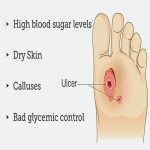
Ulcers in people with diabetes are most commonly caused by:
- Poor circulation: This is a form of vascular disease in which blood doesn’t flow to your feet efficiently. This cause can also make it difficult for ulcers to heal.
- High blood sugar: This can slow the healing process of an infected foot ulcer.
- Nerve damage: Nerve damage is a long-term effect and can lead to a loss of feeling in your feet. Damaged nerves can feel tingly and painful. Nerve damage reduces sensitivity to foot pain and results in painless wounds that can cause ulcers.
- Irritated or wounded feet

Physical Treatment
Physiotherapists can treat diabetic foot ulcers using therapeutic exercises, electrotherapy, manual therapy and assistive technologies. All physiotherapeutic interventions were adjuvant to standard treatment for wounds provided by other health professionals. The primary outcomes were wound size and healing time, with highly favourable results obtained for the experimental groups compared with the control groups.

Medical Nutrition therapy
It is a therapeutic methodology to treat medical conditions and their related symptoms by the usage of a specifically tailored diet formulated and monitored by a specialist. Nutrition often is not the first thing clinicians think about when treating patients with a diabetic foot ulcer, but it is a critical component of the wound healing process. Nutrition is connected to every facet of healing, including immune function, glycemic control, weight management, and physical ability.

Hyperbaric Oxygen Therapy
The procedure involves a person entering a pressurised room and breathing almost pure oxygen. HBOT can also improve one’s response to antibiotics, generate new capillaries, and stimulate the release of the body’s natural stem cells, all of which can help to reduce recovery time. HBOT can decrease pain levels, improve your quality of life, and make the management of these non-healing wounds easier.

Acupuncture Therapy
Acupuncture is a technique in which practitioners stimulate specific points on the body – most often by inserting thin needles through the skin. Acupuncture stimulates nerve fibres to transmit signals to the spinal cord and brain, activating the body’s central nervous system. Acupuncture therapy may be an efficacy and safe treatment for DF, which may work by improving vascular circulation in the lower extremities or regulating immunity to relieve pain and promote wound healing.
-
Amina From Oman Came To India For The Treatment Of A Diabetic Foot Ulcer
Global Stem Cell Care not only assisted me in having the best treatment but also helped me with international travel-related issues. I was surprised at how much I was struggling,…
-
Daniel Wills Visited India For Stem Cell Treatment To Treat His Diabetic Foot Ulcer
I want to thank the whole staff of Global Stem Cell Care, as they assist me very well during the stem cell therapy for my diabetic foot ulcer. Initially, I…
-
Ramona Came To Us For The Treatment Of A Diabetic Foot Ulcer
Hi, my name is Ramona, and I was very irritated with my foot ulcer. I was even prescribed by a doctor to go for amputation, as that would be the…
-
Ruby Smith Came To India For The Treatment Of Diabetic Foot Ulcers Via Stem Cells
I recently received stem cell therapy for my foot ulcer on my cousin’s advice, and this therapy seems to have worked wonders as my condition has improved. Also, I have…
IMPLANTATION
The following is the structure that is followed during the implantation stage:
MECHANISM
For the treatment of Diabetic Foot Ulcer, Mesenchymal Stem Cells are used, which promote the ulcer’s healing process. The stem cells help to increase the re-epithelialization in the foot ulcers.


Get Stem Cell Treatment For Diabetic Foot Ulcer
- Treatment of Diabetic Foot Ulcer can be done effectively through stem cell therapy. Improvements can be seen in the patient’s condition through stem cell treatment.
- According to the American Podiatric Medical Association (APMA), globally, 15% of diabetic patients get foot ulcers
- It is especially important to identify the foot ulcers as if they go unnoticed, then there are chances that it might turn into permanent damage.
- Global Stem Cell Care provides the best treatment of stem cell treatment for Diabetic Foot Ulcer through which major improvements can be seen in the foot ulcer.
How Stem Cell Therapy Works?
Stem Cell Treatment is an effective way to treat Diabetic Foot Ulcer. This treatment is quite beneficial for the patients as it has no side effects.
Wound healing is initiated through stem cell treatment through which the patient suffering from this condition finds major relief.
Global Stem Cell Care uses Mesenchymal Stem Cells for the Treatment of Diabetic Foot Ulcer through which the healing of the wound speeds up
VIP TREATMENT TO PATIENTS AT GLOBAL STEM CELL CARE
The therapy sessions given to the patients at Global Stem Cell Care occur in the VIP treatment room in the advanced clinic.
24*7 supervision is maintained on the patients by the efficient medical team.
Global Stem Cell Care highly recommends the patients stay for a minimum of 3 days in Hospital.

GLOBAL STEM CELL CARE TREATMENT PROCEDURE
The treatments that take place in Global Stem Cell Care are of 3 days. The treatment protocol is safe and non-invasive. The patients can travel the next day. The following is the day-wise schedule for the patients.
- Pick up from the Airport to the Hospital
- Interaction between Dr and Patient, to clear all their doubts at that time
- Admission procedure
- Clinical examination & Lab test will be done prescribed by the doctor
- Supportive Therapy
- Stem cell Procedure
- Supportive therapies
- Physiotherapy
- Supportive Therapy
- Physiotherapy
- Discharging formalities
- Drop back to the Airport
- For Admission, carry the identity card (Passport/ Pan Card / Driving License)
- Carry the hard copy of Patient reports
WHAT TO EXPECT FROM
STEM CELL TREATMENT FOR DIABETIC FOOT ULCER?
The stem cell treatment for Diabetic Foot Ulcer really helps the patients to recover from this condition. The treatment procedures provided by Global Stem Cell Treatment have no side effects, and they provide healing and positive results to the patients.
The best of medical facilities and treatment is given to Global Stem Cell Care patients. The majority of the patients show remarkable improvements in their condition.
For more than ten years, Global Stem Cell Care has been healing patients and increasing their quality of life.
In various patients, the effects of the treatment vary due to different biological factors. The Global Stem Cell Care patients get the quality services as there is a protocol that is followed by the team of Global Stem Cell Care that includes testing for the inflammation developing factors before the treatment commences.
The testing is done during the treatment also. Research is being done on the efficacy of Allogeneic Stem Cell Therapy, and for that, the data is required for future prognosis to know the treatment after-effects on the patient.
Our Promise
Global Stem Cell Care has become the trustable stem cell centre in India because we promise to provide the best quality stem cell therapy for diabetic foot ulcers. We committed to utilise the regenerative potential of stem cells to restore the damaged cells. We are popular in India because we focus on the safety and comfortability of our patients. We also assist patients in making arrangements for needs like transportation and accommodation and offer thorough advice on every facet of their visit. To the best of our knowledge, we will respond to all of your inquiries. Our unwavering ethics dictate that we must always be open and honest with our clients about every facet of their care.


Cost
Stem cell therapy can be expensive in many countries due to its remarkable results. That’s why most individuals are trusting us for their stem cell treatment for diabetic foot ulcers in India. Because we believe in affordability and safety of our patients. After diagnosing the patient’s problem, we do our best to lower the price as much as possible. There are some factors which can fluctuate the cost such as number of stem cells required, severity of the condition, and other factors. Although, We don’t compromise the quality standards after reducing the cost of the treatment.
Success Rate
Nowadays, diabetic foot ulcers have many ways to be treated but stem cell therapy is the effective one among them. By using stem cells’ regenerative potential, this therapy can stop the progression of the condition and can be helpful for saving patients from this condition. Several surgeries claim their effectiveness and provide the trustable results. Unfortunately, these treatments and surgeries are less affordable than stem cell therapy. Additionally, stem cells support this regenerative strategy by identifying contaminated cells for elimination and changing into the appropriate cell types to complete the cell deficit. At Global Stem Cell Care, we treated many patients who are suffering from diabetic foot ulcers and their testimonials are proof of the positive outcomes of our stem cell therapy.

Advantages
There is no need to worry about the treatment of diabetic foot ulcers until Global Stem Cell Care is here to treat your condition with the most innovative approach, known as stem cell therapy. We are the best stem cell therapy hospital in Delhi who provide affordable treatment options without compromising the international standards. You can experience many benefits from stem cell therapy and below we mention some of the advantages:
- Enhanced wound healing: Stem cells have the unique ability to differentiate into various cell types, promoting tissue regeneration and accelerating the healing process of diabetic foot ulcers.
- Anti-inflammatory effects: Stem cells release cytokines and growth factors that modulate the inflammatory response, reducing inflammation at the ulcer site and creating a conducive environment for healing.
- Angiogenic properties: Stem cells stimulate the formation of new blood vessels (angiogenesis), improving blood flow to the ulcerated area and facilitating nutrient delivery and waste removal, vital for tissue repair.
- Immune modulation: Stem cells regulate immune responses, suppressing excessive inflammation and promoting tissue tolerance, which aids in preventing recurrent ulcers and complications.
- Minimally invasive procedure: Stem cell therapy can be administered locally through injections or topically as a gel or scaffold, minimising patient discomfort and reducing the risk of complications associated with invasive surgical procedures.
- Personalised approach: Stem cell therapy can be tailored to individual patients, considering factors such as ulcer severity, patient age, and comorbidities, maximising treatment efficacy and improving clinical outcomes.
Quality Control
Our aim is to make stem cell therapy effective and safe for all the patients. That’s why our researchers are doing several clinical trials. We promise to keep quality control protocols to ensure you get the remarkable outcomes from our treatment option. Here are some of our quality regulation protocols:
- Donor Screening: Rigorous screening of stem cell donors to minimise the risk of transmitting infectious diseases or genetic abnormalities.
- Manufacturing Standards: Adherence to strict protocols during stem cell culture, expansion, and differentiation to maintain cell purity and potency.
- Sterility Assurance: Implementation of aseptic techniques and sterile environments throughout the production process to prevent contamination.
- Product Characterization: Comprehensive characterization of stem cell products to confirm identity, viability, and functionality.
- Batch Testing: Regular testing of each batch for purity, potency, and safety parameters before release for clinical use.
- Post-Treatment Monitoring: Continuous monitoring of patients post-treatment to evaluate efficacy, detect adverse reactions, and refine therapy protocols.
Quality Certificate
A quality certificate for stem cell therapy in diabetic foot ulcer treatment ensures adherence to rigorous standards. It signifies compliance with regulatory protocols, ensuring safety, efficacy, and consistency in procedures. The certificate verifies the expertise of medical personnel, the quality of stem cell sources, and the integrity of manufacturing processes. It encompasses stringent quality control measures, including thorough screening for contaminants and genetic stability checks. Additionally, it validates the facility’s commitment to ongoing research, monitoring, and continuous improvement. Ultimately, this certificate instil confidence in patients, healthcare providers, and regulatory bodies, fostering trust in the therapy’s reliability and potential for positive outcomes.


swelling of the foot is reduces
pain in the foot reduces
Possible Improvement
Through stem cell treatment for Diabetic Foot Ulcer, major improvements can be seen in the condition of the patient. The improvements that can be seen in the patients are that the wound’s healing process speeds up, the size of the wound reduces, swelling of the foot is reduced, and pain in the foot reduces. Best Stem Cell Treatment for Diabetic Foot Ulcer can be seen in Global Stem Cell Care treatment.
FOLLOW UP
Global Stem Cell Care effectively follows up with the patients who are suffering from Diabetic Foot Ulcer. Through the follow-up process, the medical team improves the patient and can understand if the patient is finding any discomfort.
At regular intervals, the team of Global Stem Cell Care calls and keeps a check upon the patients. Improvements are made in the treatment process after understanding the feedback of the patients.
FREQUENTLY ASKED QUESTIONS
Is Diabetic Foot Ulcer a serious condition?
Yes, Diabetic Foot Ulcer is a serious condition because if proper treatment is not done, then it can turn into permanent damage.
Can Diabetic Foot Ulcer be prevented?
Yes, Diabetic Foot ulcers can be prevented through proper care of the foot, not putting constant pressure on the foot, and removing dead skin from the foot to keep it clean.
In which ways stem cell treatment works for Diabetic Foot Ulcer?
The stem cell treatment for Diabetic Foot Ulcer is a revolutionary treatment methodology through which the ulcer’s healing process speeds up.
Are there any side effects of stem cell treatment for Diabetic Foot Ulcer?
No, there are no side effects of stem cell treatment for Diabetic Foot Ulcer.
What exactly is Stem Cell Treatment for Diabetic Foot Ulcer in India?
Stem cell treatment is a regenerative medical approach. It focuses on healing chronic diabetic foot ulcers. Doctors use stem cells with repair properties. These cells support damaged tissue recovery. They improve poor blood circulation. Treatment targets the ulcer’s root cause. Cells are delivered near the wound area. Healing becomes faster and stronger. Indian clinics use controlled medical protocols. The therapy supports long-term wound closure and tissue strength.
How do stem cells help heal diabetic foot ulcers?
Stem cells release healing growth factors. These signals repair damaged tissues. New blood vessels form near the ulcer. Better circulation improves oxygen delivery. Oxygen supports faster skin regeneration. Inflammation around the wound reduces gradually. Immune response becomes more balanced. Infection risk lowers over time. The ulcer environment becomes healthier. This promotes stable and long-lasting healing.
Is stem cell therapy painful or invasive for patients?
Stem cell therapy is less invasive. It does not need extensive surgery. Practitioners administer local anaesthesia during the procedures. Sufferers experience less discomfort. Mild soreness may occur briefly. Injections are carefully placed near ulcers. Recovery is usually quick. Most patients walk the same day. Hospital stays remain short. Post-procedure pain management is rarely needed.
How long does stem cell treatment take in India?
Treatment timelines are usually short. Initial evaluation happens first. Doctors review medical history carefully. Diagnostic tests assess circulation and infection. The procedure itself takes hours. Hospital stays lasts one to three days. Follow-ups are scheduled afterward. Healing continues over weeks. Progress depends on ulcer severity. Doctors monitor recovery closely during visits.
What improvements can patients expect after treatment?
Ulcer size may reduce gradually. Pain often decreases early. Swelling around wounds reduces. Blood flow improves visibly. New tissue forms steadily. Wounds become cleaner and healthier. Infection chances drop significantly. Walking comfort improves over time. Dressing needs may reduce. Overall foot health becomes more stable.
Who qualifies for stem cell therapy in India?
Patients with non-healing ulcers qualify. Long-standing diabetic ulcers benefit most. Poor blood circulation cases respond well. Recurrent ulcers may need this therapy. Doctors evaluate infection levels carefully. Overall health is assessed thoroughly. Severe cases need additional screening. The criteria for eligibility depend on individual cases. Personalized treatment strategies continue to apply. Approval from a specialist is always necessary.
Are there any side effects after stem cell therapy?
Side effects are usually mild. Temporary redness may occur. Injection site soreness can happen. Fever is rare. Infection risk remains low. Clinics follow strict safety standards. Patient monitoring continues after treatment. Follow-ups help manage reactions early. Most patients tolerate therapy well. Serious complications are uncommon with proper care.
Does stem cell therapy reduce amputation risk?
Yes, amputation risk reduces significantly. Improved circulation protects foot tissues. Faster healing prevents tissue death. Infection control improves wound safety. Chronic damage slows dramatically. Ulcers stabilize before worsening. Many patients avoid surgical removal. Limb preservation becomes more achievable. Early treatment gives better outcomes. Doctors focus on saving functional tissue.
Why do patients choose India for this treatment?
India offers advanced regenerative medicine. Doctors have specialized experience. Clinics use modern technology. Treatment costs remain affordable. Quality standards are maintained strictly. International patients receive support services. Personalized care plans are common. The infrastructure for medical tourism is well developed. There is post-recovery support after treatment. India offers ease of access without risking quality.
How do doctors evaluate ulcers before stem cell treatment?
Doctors examine wound depth carefully. Infection signs are checked thoroughly. Blood circulation tests are performed. Imaging may assess bone involvement. Nerve sensitivity is evaluated. Blood tests confirm diabetic control. Ulcer grading helps plan therapy. Factors that pose risks to the patient’s health are analysed thoroughly. Treatment plans become dependent on the diagnosis that is made. Accurate diagnosis ensures better outcomes.
Can stem cell therapy work with other treatments?
Yes, combined treatment improves results. Wound dressings continue after therapy. Maintenance of sugar levels in the blood is crucial. Use of antibiotics can be done if necessary. Physiotherapy helps to promote improvement in circulation. Nutritional guidance helps healing speed. Regular foot care continues. Combined care strengthens recovery outcomes. Doctors adjust plans as healing progresses.
How soon can results appear after therapy?
Early changes may appear within weeks. Pain reduction often comes first. Swelling decreases gradually. Wound edges start closing. Full healing takes time. Progress varies by ulcer severity. Diabetes control affects results. Regular follow-ups track improvement. Doctors adjust care if needed. Patience supports long-term healing success.
Conclusion:
Diabetic Foot Ulcer is recognized as a complication of diabetic patients. If a diabetic patient has a Diabetic Foot Ulcer, it restricts the mobility of that diabetic patient. It also causes discomfort. It also affects the routine of the patient. There is poor blood flow in the legs of the diabetic patient. It causes poor healing of the wound. The nerve lesion causes the loss of sensation of pain. Cuts easily develop into deep ulcers. There is rapid infection of the legs of the diabetic patient. Many patients face long recovery periods. Severe ulcers increase amputation risk significantly.
Stem cell therapy offers a regenerative treatment option. It addresses the root cause of delayed healing. Stem cells support natural tissue repair processes. They improve blood flow near ulcer sites. New blood vessels form gradually. Oxygen supply to damaged tissues increases. Inflammation around wounds reduces effectively. Healing becomes faster and more stable. This therapy goes beyond surface-level wound management.
Stem cell treatment helps reduce serious complications. Infection risks decrease with improved healing. Pain levels often reduce over time. Ulcer size shrinks gradually with care. Tissue strength improves steadily. Blood circulation becomes more effective. Amputation risk lowers significantly. Patients regain better mobility. Daily activities become easier. Overall foot health improves consistently.
India provides advanced stem cell treatment facilities. Clinics follow strict medical safety standards. Treatments are minimally invasive and patient-friendly. Recovery time remains relatively short. Therapy complements standard diabetic management plans. Doctors also develop individual treatment plans. Follow-up visits also help check the healing process. Advances are also being made in medical science. Treatment costs remain more accessible. Many patients experience improved quality of life.
Treatment Disclaimer:
We provide consultation, case evaluation, and patient support services in the field of regenerative medicine. As per current medical guidelines in India, stem cell-based interventions (other than approved indications) are considered investigational and are available only within regulated clinical research settings. For patients exploring broader options, we also assist in facilitating access to treatment pathways, including internationally accredited centers where different regulatory frameworks may apply.