Table of Contents
- How Regenerative Medicine Works in Cardiovascular Disease
- Current investigations with stem cells involve:
- Regenerative Medicine Therapies: Stem Cells, Tissue Engineering, and More
- Challenges in Applying Regenerative Medicine to Heart Conditions
- Comparative Analysis: Traditional Treatments vs. Regenerative Approaches
- Why Expert Consultation Is Important?
- To Wrap Up
- Frequently Asked Questions
- Reference Links
Summary: Learn about the use of regenerative medicine for heart disease, what current research says, and why such methods are still experimental rather than part of standard treatment.
Heart-related conditions don’t sneak up on a person suddenly, but it’s the result of the choices we make every day. For many, it develops over time—through changes in blood flow, damage to the heart muscle or long-standing conditions like hypertension or diabetes. Recovery becomes more prolonged after cardiac issues are diagnosed because they are usually symptom-based instead of addressing the problems.
There are already established methods like medical interventions and surgery, but patients are searching for other avenues such as the field of regenerative medicine because they want to understand if there are ways to support the heart beyond traditional treatment. This is where the studies of stem cells and related cell-based approaches have begun to receive interest, but it’s important to understand before making a decision to undertake this alternative treatment.
How Regenerative Medicine Works in Cardiovascular Disease
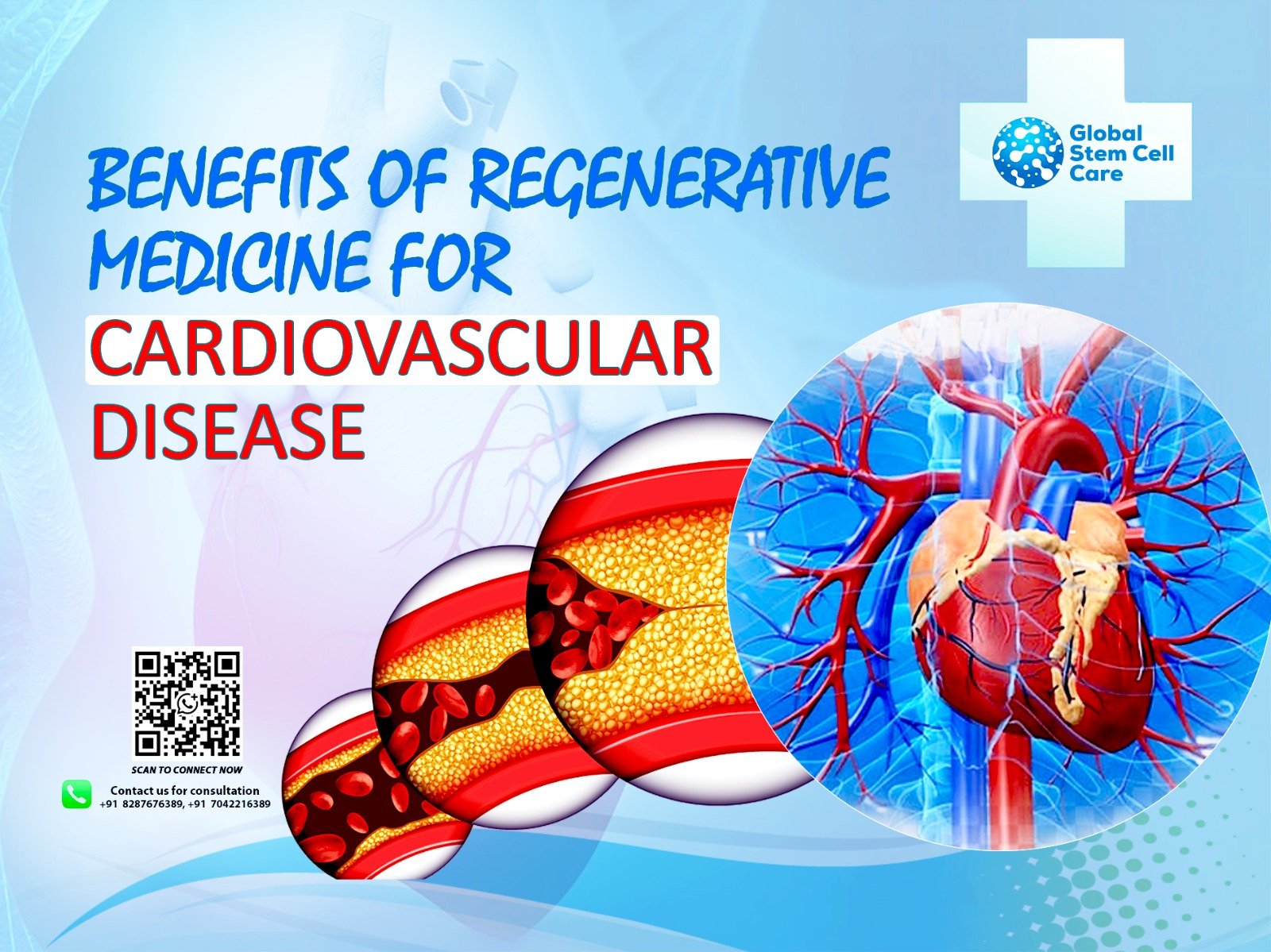
Regenerative medicine focuses on the potential of natural healing in the body. In cardiac diseases, Researchers are studying whether in regenerative medicine currently focuses on how the heart muscle responds differently when introduced to biological signals and cells.
In other words, rather than just treating symptoms, researchers are examining regenerative medicine to determine whether it is possible to influence the process of recovery of the heart after damage.
Current investigations with stem cells involve:
- The modulation of inflammation within the heart muscle
- Supporting the recovery process of injured cells
- Alterations in blood vessel development
It is important to understand that this treatment is still in research and not established.
Regenerative Medicine Therapies: Stem Cells, Tissue Engineering, and More
With ongoing research, numerous studies have been conducted in the field of regenerative medicine, which seems to be an excellent solution to many diseases.
In regard to heart-related problems, a few techniques have been considered for the treatment of cardiovascular diseases.
Stem cell-based therapy: This is one of the most commonly researched therapies. Studies regarding interactions between heart tissues and mesenchymal stem cells and other cells have been conducted.
Tissue Engineering: In this technique, biological entities that could play roles in the regeneration of damaged tissues are considered.
Biological Signaling and Growth Factors: Some researchers consider the effects of molecules on the healing process in heart tissues.
Regenerative medicine and stem cell therapy for cardiovascular disease are not approved as standard treatments in India and are limited to regulated clinical research settings.
Challenges in Applying Regenerative Medicine to Heart Conditions
For many patients, regenerative medicine might seem the easiest way to restore the functions after heart damage. It’s not that simple. The practice of regenerative medicine comes with some key challenges, including:
Consistency of Outcomes: The outcome from these interventions varies greatly depending on whether some improvement was seen or if the improvements were limited. A lot depends on the patient’s condition and overall health.
Limited long-term Data: As the treatment is relatively new, there has been insufficient long-term evidence available to evaluate the efficacy of these interventions.
Nature of Heart Tissue: Cardiac tissue is highly specialized and is not readily repaired after damage, making it difficult to regenerate in comparison to other tissues.
Variation in Research Methods: Because each study uses a particular method or a combination of several, it may be difficult to compare results between studies and find out what works and what does not.
It is due to all these reasons that regenerative therapy for heart diseases remains in the experimental stage.
Comparative Analysis: Traditional Treatments vs. Regenerative Approaches
| Aspect | Traditional Treatment | Regenerative Medicine |
| Purpose | It focused on managing symptoms and preventing disease progression | Being studied to understand if they can support repair and improve tissue response. |
| Common Methods | Medication, lifestyle changes, and surgical interventions. | Stem cell research, tissue engineering, and related biological approaches. |
| Evidence Level | Well-established with long-term clinical evidences | It is still under research with limited and evolving evidence. |
| Consistency in Outcomes | Generally predictable and standardised | In some cases, outcomes vary across studies and individuals. |
| Role in Treatment | Primary and widely used in routine care | It is not a replacement, but is being explored as a supportive treatment |
| Availability | Widely available and part of standardised treatment | Limited to research settings and regulated clinical trials |
| Patient Consideration | Advised based on established guidelines | Performed only after proper evaluation and understanding of the investigational nature. |
Why Expert Consultation Is Important?
If you want to learn more about regenerative medicine and even think of choosing stem cell therapy, you might want to slow down a bit first because there are still many things you need to know about it. Information about this field may often be unclear or misleading, but consulting with the experts at Global Stem Cell Care will give you a clearer picture of everything that matters to you.
To Wrap Up
Management of cardiovascular diseases needs to be precise and consistent. Regenerative medicine opens up different avenues for scientific exploration, but still evolving. Presently, these methods are not considered standard treatments, and they are under study to find their place.
It is necessary to stay informed and trust existing treatment options. If you are exploring emerging treatment options, speaking with the team at Global Stem Cell Care can help you understand what is currently supported by medical guidelines and what remains under research.
Frequently Asked Questions
Q1. Is regenerative medicine used routinely for heart disease?
No, it is still being explored and has not become a standard treatment.
Q2. What is the main goal of regenerative medicine in heart conditions?
One of the questions being explored is whether it can modulate the cardiac response to injury or inflammation.
Q3. Are stem cell therapies proven for cardiovascular disease?
These interventions are experimental at this point, and the findings from different studies do not always point in the same direction.
Q4. Can regenerative medicine replace surgery or medication?
Not at the current stage. Standard therapies remain the backbone of treatment for cardiac patients.
Q5. How can patients explore these options safely?
They should discuss their condition with their doctor, get information on what is experimental and what is well established, and proceed only with fully informed consent.
Reference Links
PubMed Central — Stem Cell Therapies in Cardiovascular Disease
https://pmc.ncbi.nlm.nih.gov/articles/PMC6203676/
PubMed Central — Cardiac Regenerative Therapy Research
https://pmc.ncbi.nlm.nih.gov/articles/PMC12406451/
Frontiers in Cardiovascular Medicine — Stem Cells in Cardiac Repair
https://www.frontiersin.org/articles/10.3389/fcvm.2020.570654/full
ClinicalTrials.gov — Stem Cell Therapy in Heart Disease https://clinicaltrials.gov/search?cond=heart+stem+cell
PubMed — Stem Cell Therapy in Cardiovascular Disease Review