Table of Contents
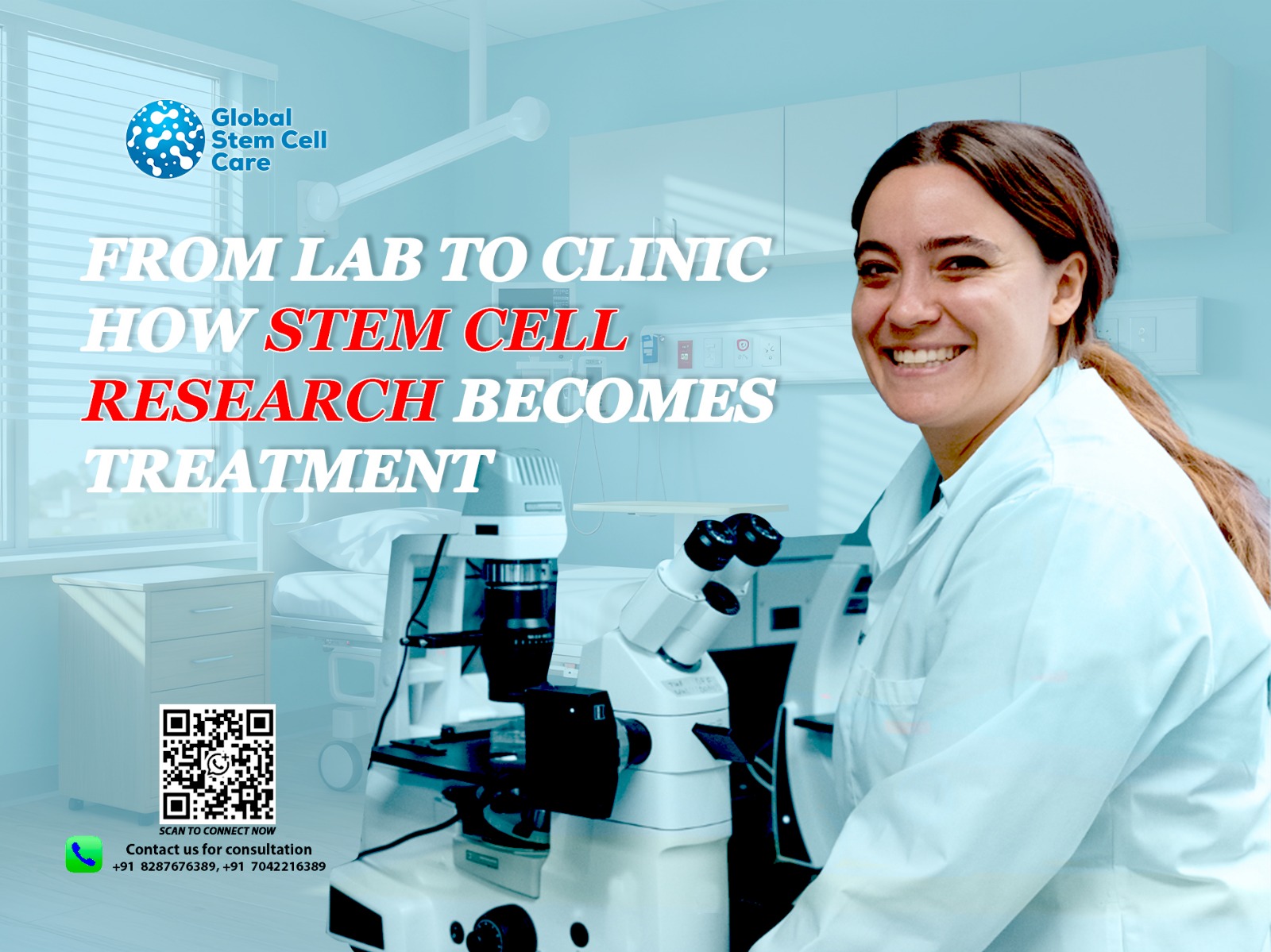
Summary: Medical research does not translate into treatment overnight. Stem cell research is a journey from laboratory discovery to clinical application that involves years of scientific validation, safety testing, and ethical oversight. This blog explains how stem cell research moves step by step from controlled laboratory research to responsible patient care.
Patients often hear about advanced therapies and medical breakthroughs and interpret them as immediate and transformative treatment options. Headlines also suggest that the cure is just around the corner, but in reality, the path for a medicine from a laboratory finding to a clinically available one takes longer due to methodical and deliberately cautious scientific approaches.
Advanced therapies like stem cell therapy reach clinical use only after passing through multiple scientific and regulatory stages designed to ensure patient safety and biological credibility. Understanding this process in simple terms helps patients distinguish between genuine scientific progress and early, unproven claims.
Understanding Stem Cell Therapy
Stem cell therapy uses undifferentiated cells capable of supporting tissue repair and biological regeneration. These tiny cells can change into various cell types, such as
- Muscle cells
- Nerve cells
- Blood cells
Although it is a very popular way of treating blood cancers such as leukemia with bone marrow transplants, it is also being studied for treating heart disease, diabetes, or joint damage.
Step-By-Step Guide: How Stem Cells Reach From Lab to Clinical Practices
Stage One: Discovery to Laboratory Research
Every advanced treatment, such as stem cell therapy, begins in the laboratory. At this stage, scientists and researchers study how stem cells communicate and respond to different biological environments. The research’s main focus is
- Cell characteristics, viability, and differentiation capacity
- Immunomodulating and signaling roles
- Interaction with damaged or inflamed tissues
Many of these findings are still purely experimental at this stage. Success in the lab does not automatically guarantee safe human application.
Stage Two: Preclinical Testing and Safety Evaluation
Before stem cell treatments are approved for human use, they undergo extensive preclinical testing and evaluation to determine their therapeutic potential and to determine therapeutic potential and identify safety concerns.
This stage helps the researchers to comprehend the following:
- Potential toxicity or immune reactions
- Cell survival and migration patterns
- Appropriate dosing and routes of delivery
Preclinical studies are of immense importance in recognizing risks as early as possible. Not many promising preclinical results reach this stage because of safety-related issues.
Stage Three: Strict & Controlled Clinical Trials
Only after successful preclinical testing and evaluation do stem cell therapies reach this stage for safe and controlled human trials. Most clinical trials conducted are divided into phases:
- Early-phase trials are about safety and tolerability.
- Mid-phase trials demonstrate biological response and feasibility.
- Later-phase trials evaluate consistency, outcomes, and limitations.
Importantly, these trials are designed to test whether stem cell therapy can support, not guarantee, healing processes. Results often vary depending on the stage of the disease, patient biology, and overall health.
Stage Four: Regulatory Review and Ethical Oversight
Before clinical use, stem cell protocols must meet the following requirements:
- Ethical sourcing of cells, with informed consent.
- GMP-certified laboratory processing for sterility and quality
- Documented handling, storage, and traceability
- Potential risks must be transparently disclosed to patients.
This stage ensures that patient safety takes precedence over commercial urgency. Treatments that avoid or circumvent regulatory frameworks often depend on claims not supported by evidence. Such practices may expose patients to unnecessary risk and ethical violations.
Stage Five: Translation Into Clinical Practice
After all the stages are accomplished, only a fraction of stem cell studies are applied in clinical settings.
When it happens, the treatment plans are usually
- Condition-specific rather than universal
- Intended as supportive or adjunct treatments
- Integrated with current healthcare practices
This structured progression explains why responsible stem cell therapy differs fundamentally from clinics offering immediate or guaranteed outcomes.
Why Does Most Stem Cell Research Not Become Treatment?
Translating stem cell discoveries from the laboratory into standardized medical treatments is exceptionally complex. Most stem cell research fails to become therapy due to the following main barriers:
- Safety Risks: Stem cells can be unpredictable. Rapid division of stem cells can lead to tumor formation, or the stem cells can target the wrong tissue following injection.
- Hurdles in Manufacture: Stem cells are living drugs, unlike mass-produced pills. It is extremely difficult to ensure all of these are identical, stable, and sterile on a mass production basis.
- Regulatory Stringency: Potency assays have to be performed to prove exactly how the cells work. Most trials fail due to their failure to prove that the cells, and not a placebo effect, were responsible for healing.
- High Costs: The treatments are customized to each person, which renders them expensive to generate, distribute, and process for coverage by health insurance plans.
For Informed Guidance: Global Stem Cell Care
If you are considering stem cell treatment for your condition, talking to an expert can help a lot in your healing journey. Consulting with regenerative medicine experts at Global Stem Cell Care bridges the gap between scientific research and practical decision-making. This approach ensures you move forward with clarity rather than unrealistic assumptions.
The Concluding Thoughts
Stem cell therapy occurs as a treatment only as a result of patience and scientific rigor. When a treatment is finally used for a clinical purpose, that represents many years of refinement and validation. For patients, it is certainly empowering to understand this process. When hope is guided by informed decision-making, patients are better protected from misleading claims.
Frequently Asked Questions
Q1. Can diet replace the lost stem cells naturally?
Ans. No. Healthy nutrition provides a foundation for cellular function and reduces inflammation, but it does not regenerate the stem cells themselves, nor does it replace medical regenerative treatments.
Q2. Does lifestyle modify the outcome of stem cell therapy?
Ans. Yes. Sleep quality, physical activity, stress levels, and metabolic health are some of the factors that will determine how well inflammation is contained and how the tissues respond during recovery.
Q3. Are supplements required before regenerative therapy?
Ans. Not necessarily. Supplements are to be taken only when medically recommended, as most of them lack direct evidence for enhancing stem cell regeneration.
Q4. Can poor lifestyle habits reduce regenerative treatment effectiveness?
Ans. These healing environments or overall responsiveness to treatment may be negatively impacted by chronic inflammation, smoking, a poor diet, or unmanaged stress.
Q5. Why is consultation important before making lifestyle changes for regeneration?
Ans. Because regenerative care has to be personalized. Professional consultation helps to align lifestyle, nutrition, and medical decisions with evidence-based safety standards.
Reference Links
PubMed Central – Clinical Trials with Mesenchymal Stem Cells
https://pmc.ncbi.nlm.nih.gov/articles/PMC3636724/
Nature Reviews – Stem Cell Therapies: Progress and Challenges
https://www.nature.com/articles/nrm.2015.10
ScienceDirect – Mesenchymal Stromal Cells: Clinical Challenges and Opportunities
https://www.sciencedirect.com/science/article/pii/S1525001625000930
Revolutionizing medicine: recent developments and future prospects in stem-cell therapy
https://pmc.ncbi.nlm.nih.gov/articles/PMC11634165/